The Schengen 90/180 Rule Explained for First-Time Europe Travelers
The Schengen 90/180 Rule Explained for First-Time Europe Travelers
You have probably seen the phrase “90 days in any 180-day period” on an airline website or a visa page and moved on, assuming it means 90 days per trip. That assumption is one of the easiest ways to get into trouble in Europe. The rule is a rolling limit, and it follows you across borders, ferry crossings and weekends in London. If you are planning your first long Europe trip, it is worth understanding before you book anything non-refundable.
The good news: it is learnable. You do not need a law degree. You need a calendar, a little discipline and a healthy buffer. Here is how the count works, which days count, and how to keep a multi-country itinerary on the right side of the limit.
What the 90/180 rule actually means
For most non-EU visitors entering the Schengen area for a short stay—whether visa-free or on a short-stay Schengen visa—the limit is 90 days of presence in any 180-day period. “Any” is the important word. The 180-day window is not a fixed calendar block that starts on 1 January or on your arrival date. It rolls forward with you.
On any given day you are in Schengen, look back 180 days. Count every day you spent in the Schengen area inside that window, including the current day. That total cannot exceed 90. If it reaches 91, you have overstayed.
The Schengen area is not the same as the EU. Ireland is outside it; Norway, Iceland, Switzerland and Liechtenstein are inside. That matters when you are mapping a route and assuming a border changes the rules.
The short version: On every day you are in Schengen, the total of your Schengen days in the previous 179 days plus today must be 90 or less.
The rolling window in practice
Suppose you spend 60 days in Schengen in spring, leave for two months, then return in summer. When you return, you do not get a fresh 90 days. The spring days are still inside your 180-day lookback, so you have 30 days left. Leave again, return later, and the arithmetic keeps shifting: old days drop out of the window only as the calendar moves forward, and new days are added each time you enter. The count is never static.
Here is a simple example. Imagine you enter on 1 March and stay 30 days, leaving on 30 March. Those 30 days remain in your lookback for months. If you return in June, they are still inside your 180-day window, so you have 60 days available, not 90. If you return in September, some or all of those March days may have rolled out, depending on the exact date, and your available days will be different again. This is why “how many days have I used this year?” is the wrong question. The right question is: “How many Schengen days are inside my personal 180-day window right now?”
What counts as a Schengen day
This is where first-time travelers often lose a day or two without realizing it. In general, the day you enter Schengen counts as day one, and the day you leave counts as your final day. It is calendar days, not nights. A short overnight stay can still use two calendar days if you arrive late and leave early.
- Arrival day: Counts. If you land in Paris on Monday, Monday is a Schengen day.
- Departure day: Counts. If you fly out of Rome on Friday, Friday is a Schengen day.
- Overnight trains and ferries: If you are inside Schengen at midnight, that calendar day counts. If you cross a Schengen border on an overnight ferry or train, check the actual crossing time and plan conservatively.
- Day trips and short exits: A same-day exit and re-entry can complicate the count. If you spend any part of the day inside Schengen, treat it as a Schengen day unless you have checked the rules carefully.
A simple planning rule helps: if you are physically in the Schengen area at any point on a calendar day, assume that day counts. You may occasionally gain a day back, but you will rarely be caught out by being too cautious.
How to count without losing your mind
You do not need special software. A spreadsheet, a notes app or a paper table is enough. The key is to record dates as you go, not to reconstruct them from memory at the airport.
- Write down every entry and exit date. Include the country and the time if you crossed near midnight.
- Count calendar days, not nights. A five-night stay from Monday to Saturday is six Schengen days.
- Run the lookback for each planned day. For any date you plan to be in Schengen, count the Schengen days in the previous 179 days plus that date. If the total is over 90, change the plan.
- Keep a buffer. If your arithmetic says day 90, treat it as day 85 in practice. Travel delays and changed plans happen.
Common mistakes first-time travelers make
- Assuming the count resets when you leave. Leaving Schengen stops adding new days, but it does not erase the old ones from your 180-day window.
- Thinking the 180-day window starts on arrival. It rolls forward every day, so the window on your return is not the same window you had on your first entry.
- Confusing the EU with Schengen. A stop in Ireland or the UK is outside Schengen, but a stop in Norway or Switzerland is inside it.
- Counting nights instead of days. A late arrival and an early departure can use two days even if you only booked one night.
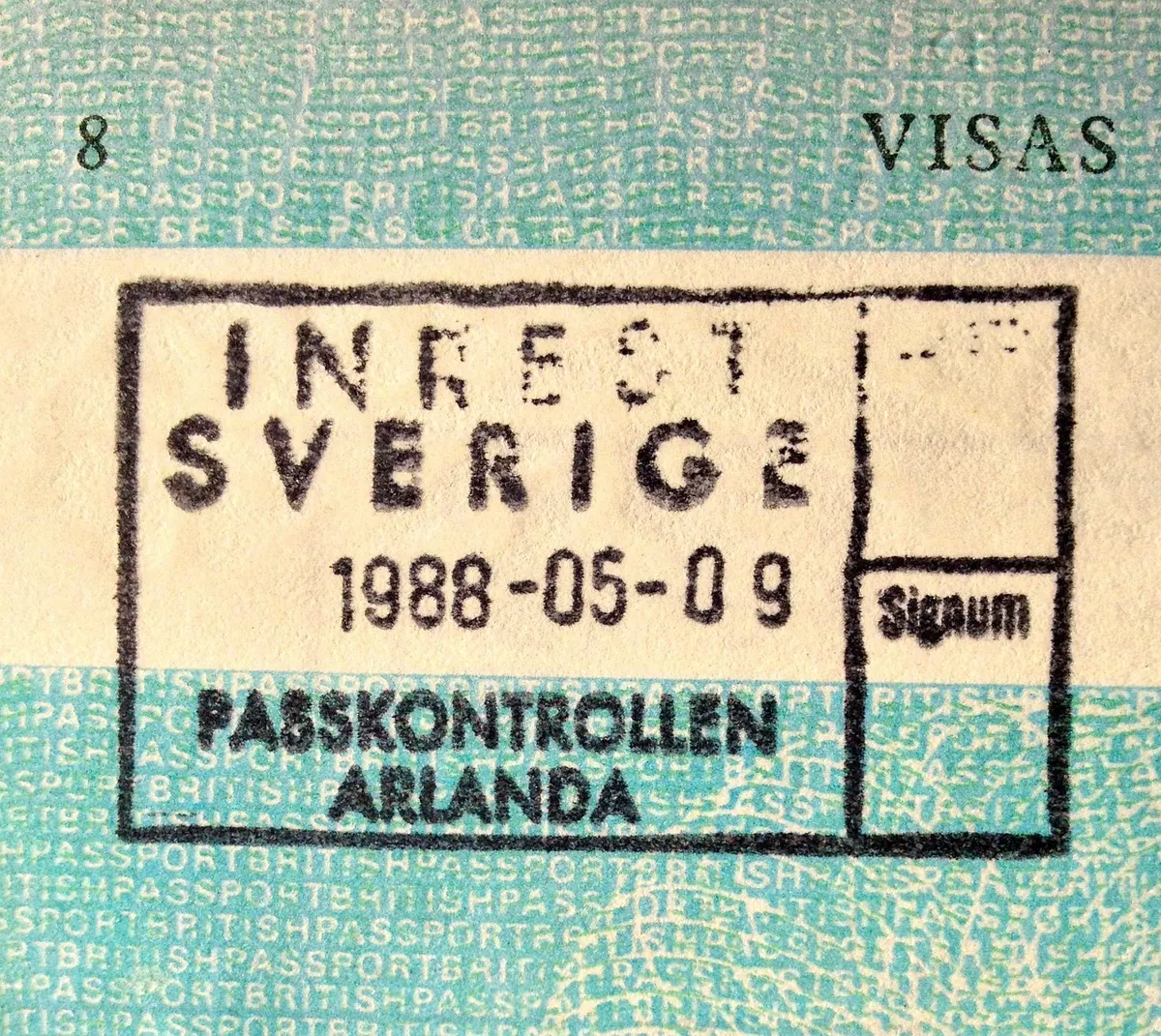
- Trusting memory. Stamps, boarding passes and booking confirmations are evidence. Keep them.
Build in a buffer, especially on a long trip
If your itinerary lands exactly on day 90, you have no margin for error. A missed flight, a delayed train, a ferry cancellation or a spontaneous change of plans can push you into overstay. Treat 85 days as a practical ceiling for a complicated multi-country trip, and keep a day or two in reserve even for shorter visits. If you need more than 90 days, look at a long-stay visa or split the trip with non-Schengen countries. Do not rely on a border officer not noticing; the arithmetic is checkable, and the consequences are not worth the gamble.
Keep records that would satisfy a border officer
Keep a simple table of entry and exit dates, countries and transport bookings. Save boarding passes, train tickets, ferry receipts and hotel confirmations. If you use e-gates and do not get a stamp, your own records become more important. This is not just for border checks; it also helps you plan the next leg of a trip without guessing. If you are asked to explain your stay, you can show the dates and the arithmetic rather than trying to remember them on the spot.
What happens if you overstay
Overstaying is not a small paperwork issue. It can lead to fines, detention, a ban from the Schengen area and future visa problems. The exact consequences depend on the country and the circumstances, but the risk is not worth the extra day. If you realize you may have miscalculated, leave as soon as possible and seek advice; do not wait to see what happens at the airport.
The takeaway
The 90/180 rule is simpler than it sounds once you stop thinking in “trips” and start thinking in “calendar days in a rolling window.” Count every Schengen day, include your arrival and departure dates, run the lookback before you book, and leave yourself a buffer. Then you can spend your energy on train timetables and museum tickets instead of border arithmetic.
Photo: robertaengland / Pixabay