How to Plan a Two-Week Italy Trip Without Renting a Car
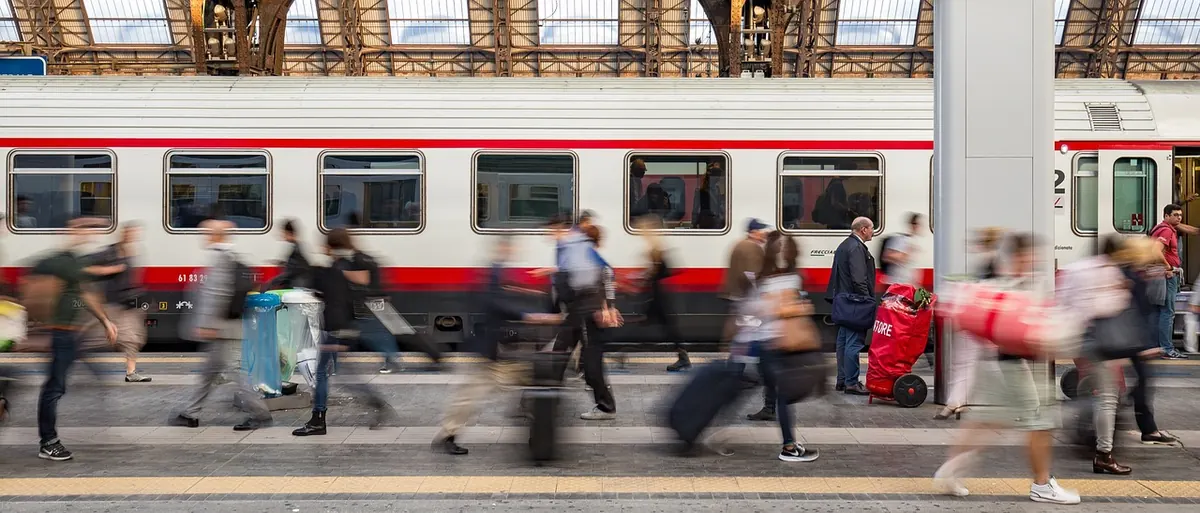
Most people who tell you Italy is best seen by car have never stood in the basement of Naples Centrale, bought a €2 ticket and been in Pompeii forty minutes later without touching a steering wheel. The country's rail spine runs from the Alps to Sicily, and the gaps it leaves — the Amalfi Coast, the Chianti hills, the smaller Tuscan towns — are plugged by buses that locals use every day. What you need isn't a car. It's an order of operations.
Two weeks is enough for five bases if you resist the urge to add a sixth. It is not enough for Rome, the Amalfi Coast, Florence, Cinque Terre, Venice and the Dolomites, no matter what a map suggests. The route below assumes you fly into one city and out of another, move roughly north, and treat every transfer as half a day of real time rather than a line on a timetable.
Choose a line, not a list
Pick a corridor and stay on it. The obvious one runs Naples → Rome → Florence → Bologna → Venice, all linked by high-speed trains that take between thirty-five minutes and an hour and a half per hop. The alternative — Milan → Verona → Padua → Venice, with Bologna as a southern spur — works just as well. What kills a car-free trip is zigzag: Florence to Naples to Florence burns a day you could have spent in the Uffizi.
Book an open-jaw flight, arriving in the south and leaving from the north (or the reverse). It costs little more than a return and removes an entire backtrack leg. Then apply the two-night rule: any base with fewer than two nights is a stopover, not a stay, and you'll spend it doing laundry and looking for your charger.
A two-week route that holds up
This is thirteen nights, five bases, and one bus day that earns its place.
- Nights 1–2, Naples. Arrive at Capodichino, take the Alibus or the metro into the centre. Use the Circumvesuviana from Napoli Garibaldi (the lower level of the main station) for Herculaneum or Pompeii Scavi — slow, crowded, cheap, and utterly reliable in the sense that another one comes along shortly.
- Nights 3–5, Rome. Frecciarossa or Intercity from Napoli Centrale to Roma Termini, about seventy minutes to two hours depending on the service. Three nights gives you two full days and one evening.
- Nights 6–8, Florence. Rome to Firenze Santa Maria Novella in roughly ninety minutes on the fast line. Day trip to Siena by bus from the Autostazione next to the station, not by train — the bus drops you inside the walls.
- Nights 9–10, Bologna. Thirty-five to forty minutes from Florence. Under the porticoes by lunch. Day trip to Modena by regional train, twenty-five minutes, for the market and the vinegar cellars.
- Nights 11–13, Venice. An hour and a half from Bologna, and the station opens directly onto the Grand Canal. Buy a vaporetto pass for the days you're there; walking the whole city is possible but the outer islands aren't.
Booking windows, in order of urgency
Fast trains, early
Le Frecce and Italo's high-speed services sell in tiers. The cheapest fares open roughly three to four months before departure and disappear quietly; booking a Rome–Florence leg eight weeks out is normal, four days out is expensive. Reserve these first, especially on Fridays and Sundays, and especially in July and August.
Regional trains, late
Regionale and Regionale Veloce trains have fixed prices and no seat reservations. There's no advantage to buying early and no penalty for buying on the day, which means you can keep your middle days flexible. Buy from the app to skip the queue, or from a machine with a card — many smaller stations have no staffed window.
Buses and boats, check the season
Private coach operators generally open sales one to three months ahead; local public buses often can't be booked at all and are paid on board or with a ticket from a tabacchi. Seasonal coastal and mountain routes may simply not run in winter. Check the operator's own timetable page the week you travel, not a third-party listing from three years ago.
Transfer buffers that protect your day
Twenty minutes is enough between two trains at the same station with a ticket already in hand. Forty-five minutes is the sensible minimum when you're changing operator, changing station or buying tickets on the spot. Ninety minutes is the right buffer for anything involving a bus, a ferry or a flight.
- Never book the last connection of the day as a tight one. An hourly service absorbs a delay; a final 19:40 bus does not.
- Treat "arrive and transfer" as a half-day. A three-hour journey with an hour of buffer eats a morning, and pretending otherwise is how itineraries fail.
- At Rome Termini and Florence SMN, use the left luggage office for a few hours rather than dragging bags around a city on a transfer day.
- If you're flying out the same day, sleep in the departure city the night before. A regional train plus a security queue is not a plan.
The bus legs that beat the train
Buses fill the gaps, and in a few places they're simply better. The SITA services along the Amalfi Coast, usually picked up in Sorrento, are the standard way to reach Positano and Amalfi; sit on the right going east if you can. Florence to Siena by Rapida coach is faster door to door than the train, which leaves you a bus ride short of the centre. Around the lakes and in the Dolomites, local bus networks do the work that a car would.
Two habits make bus travel painless. Buy the ticket before you board where that's the rule, and validate paper tickets in the machine on board — inspectors do check, and "I didn't know" is not a defence. The same goes for paper train tickets: validate before boarding, or travel on an app ticket that's already timestamped.
Small habits that keep the trip smooth
Pack for stairs, not for a boot. Station lifts exist but are often out of service, and Venice's bridges are not negotiable. Carry a refillable bottle; fountains are everywhere and free. Keep one physical card and a little cash for the tabacchi that won't take foreign cards. Photograph your tickets rather than trusting the signal in a tunnel.
If you or anyone in your party has limited mobility, or you're travelling with heavy luggage and a tight timetable, email the operator or check the station's accessibility page before committing to a connection. Assistance usually needs notice. For insurance, cancellations and anything with money attached, read the terms yourself or ask a professional — the advice here is only about timetables.
Before you book: a five-minute checklist
- Confirm which airports you're using and how you'll reach the city — some are a bus ride from the rail line.
- Lock the two long fast-train legs and the flight-day transfers first.
- Check that every transfer day has a plan B within two hours.
- Leave one empty afternoon per week. You'll use it, and you'll be glad of it.
- Re-check regional timetables a week out for engineering works, which are common on secondary lines.
Do that, and the trip becomes what it should be: a series of short, low-stakes journeys between places worth lingering in. The car stays at home. Nobody misses it.
Photo: benfuenfundachtzig / Pixabay