Carry-On Only Packing Checklist for a 10-Day Trip
Ten days, one bag, nothing checked. It sounds like a travel stunt until you try it once and realise you have spent years hauling a wardrobe you never wore. The trick is not a magic backpack or a viral folding method. It is arithmetic. Decide how often you are willing to do laundry, count the days between washes, and pack for that number instead of for ten. Everything else follows from there.
What follows is a checklist organised the way a bag actually gets packed: from the skin outward, then by laundry cycle, with separate quantities for warm and cold trips. Print it, tick it, and stop guessing at eleven at night.
Start with two numbers, not with a suitcase
The first number is your laundry cycle: how many days you will wear clothes between washes. On a city trip with a sink, four days is comfortable. On a hiking route with no running water, seven is realistic. Three cycles of four days covers ten days with room to spare.
The second number is your layers. Cold-weather packing only works if you think in three thin layers instead of one thick coat: a base layer next to the skin, a mid layer for warmth, and an outer shell for wind and rain. Three thin layers are warmer than one bulky jacket, and they let you adapt to a heated museum, a windy station platform and a cold evening without unpacking everything you own.
The rule that ties it together: pack for your longest stretch between washes, plus one spare set. That spare set is what you wear on laundry night, and it is what saves you when the sink is blocked or the weather turns.
The layer checklist
These are the pieces to choose from. Exact quantities come in the next two sections, because a beach week and a February city break need different numbers of the same categories.
Base layer, next to the skin
This is where fabric matters more than style. Look for quick-drying synthetics or merino wool; both can be rinsed in a sink at night and worn again the next morning. Cotton is comfortable for a day and miserable for three — it holds water, dries slowly and starts to smell. Pack underwear and socks that match this logic.
Mid layer
One thin fleece, one fine-gauge knit or one light shirt, depending on the climate. Mid layers are the easiest thing to overpack, because they are the most tempting. Two is almost always enough.
Outer layer
A packable rain shell earns its place on any trip. For cold destinations, add an insulated jacket that compresses small. For warm ones, the shell alone will do, and a light long-sleeve shirt handles sun and air conditioning.
Feet and sleep
Two pairs of shoes maximum: one for walking, one for evenings or water. Wear the bulkiest pair on the plane. For sleeping, a dedicated set of sleepwear means you are not washing your day clothes twice as often — or simply retire a T-shirt at the end of each cycle.
Warm destinations: what ten days actually looks like
- Tops: 5 lightweight T-shirts or sleeveless tops, 1 long-sleeve shirt for sun protection or evenings
- Bottoms: 2 pairs of shorts or a skirt, 1 pair of light trousers
- Underwear and socks: 6 pairs each
- Layers: 1 thin hoodie or overshirt, 1 packable rain shell
- Swimwear: 1 set, 2 if you swim daily
- Shoes: walking shoes plus sandals
- Sleep: 1 T-shirt and 1 pair of light shorts
That is roughly three laundry cycles of four days, with one spare. In heat you will change tops more often than trousers, so weight your quantities towards tops and plan to rinse one T-shirt each evening. It takes four minutes and keeps the whole system running.
Cold destinations: same maths, thicker layers
- Base layers: 4 long-sleeve thermal tops, 2 thermal leggings
- Mid layers: 2 sweaters or fleeces, 1 light shirt for indoor wear
- Outer: 1 insulated jacket, 1 waterproof shell
- Bottoms: 2 pairs of trousers, 1 of them warm and water-resistant
- Underwear and socks: 5 pairs each, plus 2 pairs of thick socks
- Accessories: hat, gloves, scarf — worn on travel days, not packed
- Shoes: waterproof walking boots plus one lighter pair
Cold trips are easier to pack light for than people expect, because you wear the same jacket every day and nobody notices. Thermal base layers are the real workhorses: two sets rotated and washed every few nights will carry you through a ten-day winter trip. Wash them in cool water and never wring them hard.
Plan the laundry cycle before you pack
Choose your wash nights now — day four and day eight, say — and write them where you will see them. Everything else in the bag depends on those two evenings going smoothly.
The hand-wash kit
A flat sink plug (many hotel sinks have none), a small bottle of travel detergent or a few detergent sheets, and a dry bag if you want to wash without filling a sink. Add a length of travel clothesline or a few inflatable hangers if your accommodation has nowhere obvious to hang things. All of it weighs less than a paperback.
Drying without a radiator
Roll each wet item in a dry towel and press down hard before hanging. This removes most of the water and cuts drying time roughly in half. Hang things where air moves, not in the bathroom. Synthetics and merino are usually dry by morning; cotton may not be.
If you would not wash it by hand in a sink, do not pack it. That single question eliminates half the bag.
The rest of the bag
- Toiletries: solid shampoo bar, soap, deodorant, toothbrush and paste, razor. Solids save space and avoid liquid limits entirely.
- Liquids: decant into small bottles and check your airline's current cabin rules before you fly, as they differ by country and change.
- Health: a small first-aid kit, blister plasters, painkillers, and any prescription medication in its original packaging in your carry-on. Ask your pharmacist about quantities and documentation for your destination well before departure.
- Tech: one multi-port charger, the right plug adapter, a power bank, headphones. A single charger for phone, watch and e-reader removes the tangle.
- Documents: passport, boarding passes, insurance details, and a paper copy of each kept separately from the originals. Check entry requirements for your nationality before booking anything non-refundable.
- Small things that matter: refillable water bottle, a few zip bags, a compact umbrella, a spare tote for groceries or dirty laundry.
Final check on the bed
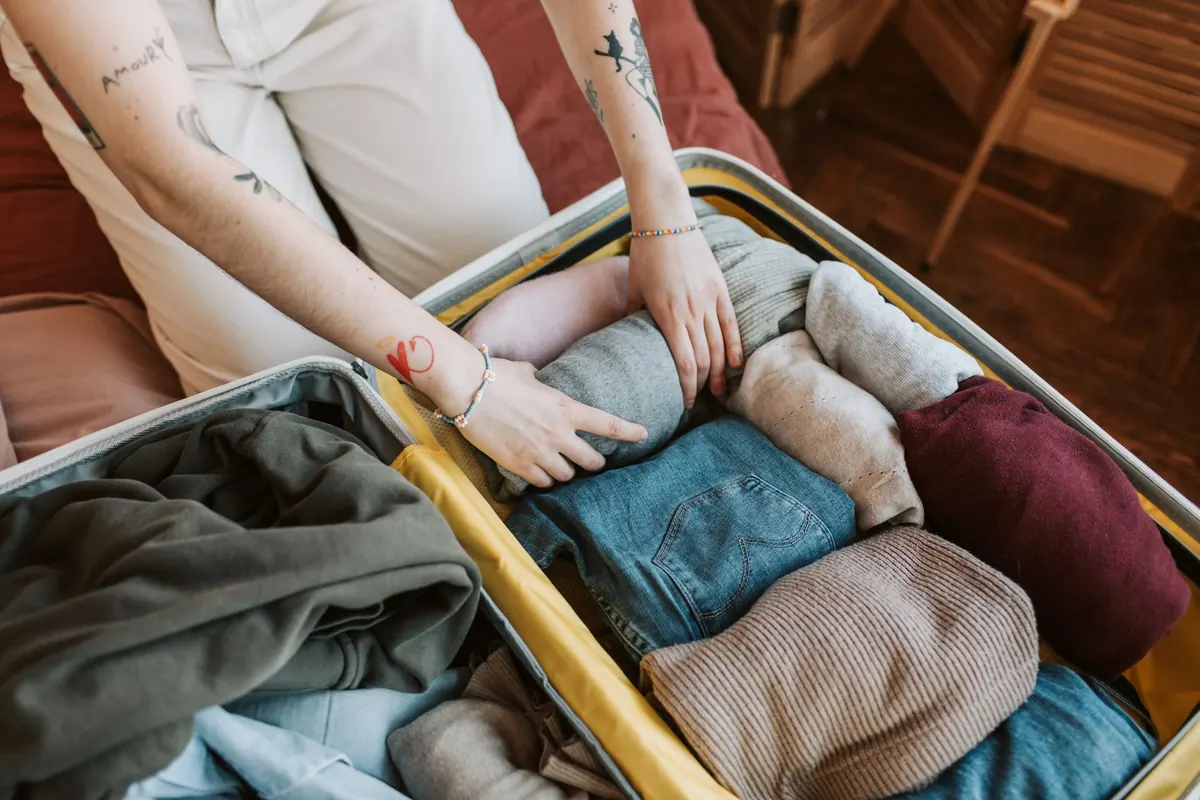
Lay everything out before it goes in the bag. Anything you cannot imagine wearing three times in ten days goes back in the wardrobe. Anything you packed "just in case" goes back too — you can buy a charger, a toothbrush or an umbrella almost anywhere, and the space is worth more than the insurance.
Then do the last test: wear your heaviest shoes and your bulkiest layer on the travel day, put the rest in the bag, and close it. If it zips without a fight, you are done. If it does not, remove one mid layer and one pair of shoes before you touch anything else. Ten days of travel fits in a carry-on; it just needs the arithmetic done first.
Photo: Vlada Karpovich / Pexels