How to Photograph Crowded Landmarks Without the Crowds
At 10:40 on a Tuesday in July, the square you crossed a continent to see is a wall of shoulders, raised phones and tour-group flags. The fountain is in there somewhere. You take the picture anyway, and it comes out as a crowd with a monument behind it.
It doesn't have to. Crowds keep a schedule, and they obey geometry: they gather at eye level, on open ground, in the middle of the day. Change any one of those three things and the place opens up. None of the techniques below needs special access or a permit — just some planning, an early alarm and enough patience to stand still for five minutes.
Work the clock, not the camera
The biggest variable in your photograph isn't the lens you packed. It's the hour you show up.
Almost every famous landmark has a rush hour, and the pattern repeats: coaches unload mid-morning, guided groups arrive after breakfast, and the square stays packed until the light flattens out and the day-trippers drift off to dinner. That gives you two good windows, one at each end of the day — and one of them is far better than the other.
- Sleep nearby. A hotel ten minutes' walk from the viewpoint buys you the whole first hour of light. Staying across town means the first train decides your schedule.
- Check the sun before you check the map. Note sunrise, sunset and which direction the light comes from. A facade in shadow at 7am may be glorious at 8pm, and the crowds follow the light too.
- Find out when the gates open. Churches, viewing platforms, gardens and museums often have a first hour when visitors are few and the staff are still sweeping. Be there at opening rather than an hour after.
- Read the calendar. Weekday mornings are calmer than weekends, the shoulder seasons calmer than August, and a local feast day or market can either ruin your shot or hand you the best picture of the trip.
- Scout the evening before. Walk the square at the hour you plan to shoot. You'll learn where the barriers are, which corner fills up first and where you can plant a tripod without standing in a doorway.
Blue hour, before anyone is awake
Morning blue hour is the cleanest window you'll get. The people who are out tend to be photographers standing quietly, and the light is soft, even and forgiving — no hard shadows across the facade, and a sky that's bright enough to hold detail while the street lamps are still on.
Arrive around forty minutes before sunrise, not at sunrise. Set up while it's still dark, compose once, and shoot through the whole transition. Then keep working for the twenty minutes after the sun clears the rooftops: the low light rakes across stone and gives you a second, warmer set of pictures, still with almost nobody in them.
Evening blue hour is the same light but twice the company. Everyone has the same idea, nobody wants to leave, and the square stays busy until well after dark. If you only have one evening in a city, use it to scout and save the shooting for the morning.
Change your altitude
Crowds live at standing height, in the middle of the pavement. Move vertically and they thin out immediately.
Look for a church step, a bridge parapet, the top of a stairway, a terrace, a museum window, the upper deck of a car park, a rooftop bar that serves coffee at eleven in the morning, or a hillside path above the old town. Even a modest change of height separates the heads from the architecture and lets the ground of the square read as a surface rather than a soup of shoulders.
The opposite works too. Get low — camera almost at pavement level, resting on a bag or a small tripod — and the crowd compresses into a thin band along the bottom of the frame while the monument fills the rest. Wet stone or a shallow puddle turns that into a reflection and doubles the building.
Long exposure turns people into weather
The most reliable way to remove a crowd is to leave the shutter open until the crowd stops being people. A couple of seconds and walkers become streaks. Thirty seconds and they thin into a faint haze that reads as mist or wind — the square looks like it's breathing rather than queuing.
- Set the tripod, compose and lock everything down. Switch to manual focus and focus on the building, not the nearest person.
- Meter the scene without the filter and note the shutter speed at f/8 and ISO 100.
- Fit a 6-stop or 10-stop neutral density filter and recalculate — most cameras will meter through it, but check the histogram rather than trusting the screen.
- Start at one second, then four, then fifteen, then thirty. Review each one. You're looking for the point where people blur but the architecture stays crisp.
- Use a two-second timer or a remote release, and cover the viewfinder if light leaks in from behind.
A long exposure also removes the small stuff: pigeons, bicycles, the couple who walked through at the wrong moment. Two cautions. Many churches and museums forbid tripods, and in narrow streets a tripod across a walkway is a genuine hazard — set up against a wall, not in the middle of the path.
Frame tight, look up, cut the floor
If a long exposure isn't possible — handheld, no filter, a crowd that won't blur — frame the problem out instead.
Tilt the camera up. Put the top third of the frame on dome, tower or sky, and the pavement where everybody stands simply leaves the picture. Zoom into a fragment: a doorway, a balcony, a carved capital, the corner of a fountain with one figure at the edge for scale. Use an arch, a lamppost or a café doorway as a foreground frame that physically hides the crowd behind it.
A longer lens helps more than you'd expect. Telephoto compression stacks the far facade against the near one, filling the frame with stone and windows rather than with people crossing the foreground.
Wait for the gap
Sometimes the best tool is standing still. Choose the composition, set the camera, focus, and then wait. Crowds move in pulses: a group passes, and for two or three seconds the square is briefly, imperfectly clear. Shoot in short bursts and pick the frame with the fewest interruptions — you'll often find one where the only person left is a lone figure crossing at the far end, which usually improves the picture rather than spoiling it.
Combining several frames to erase people is a common technique and it does work. Do keep it honest: if the square could never have looked that empty, what you've made is an illustration rather than a photograph of the place. A single blurred passer-by is usually more truthful, and often more interesting.
A short field checklist
- Two alarms: one for arrival, one for the actual shot.
- Tripod, ND filter, remote release, a lens cloth for morning damp.
- Sunrise time and the direction of first light, saved offline.
- Opening hours of anything you need to climb or enter.
- Two compositions planned in advance, so you're not improvising in the dark.
- A backup plan: if the square is impossibly busy, shoot the detail, the doorway, the reflection, the roofline — and come back tomorrow.
The empty version of a famous place exists every single day. It just doesn't last long, and it never happens at a convenient hour. Set the alarm, take the higher ground, and let the shutter stay open a little longer than feels right.
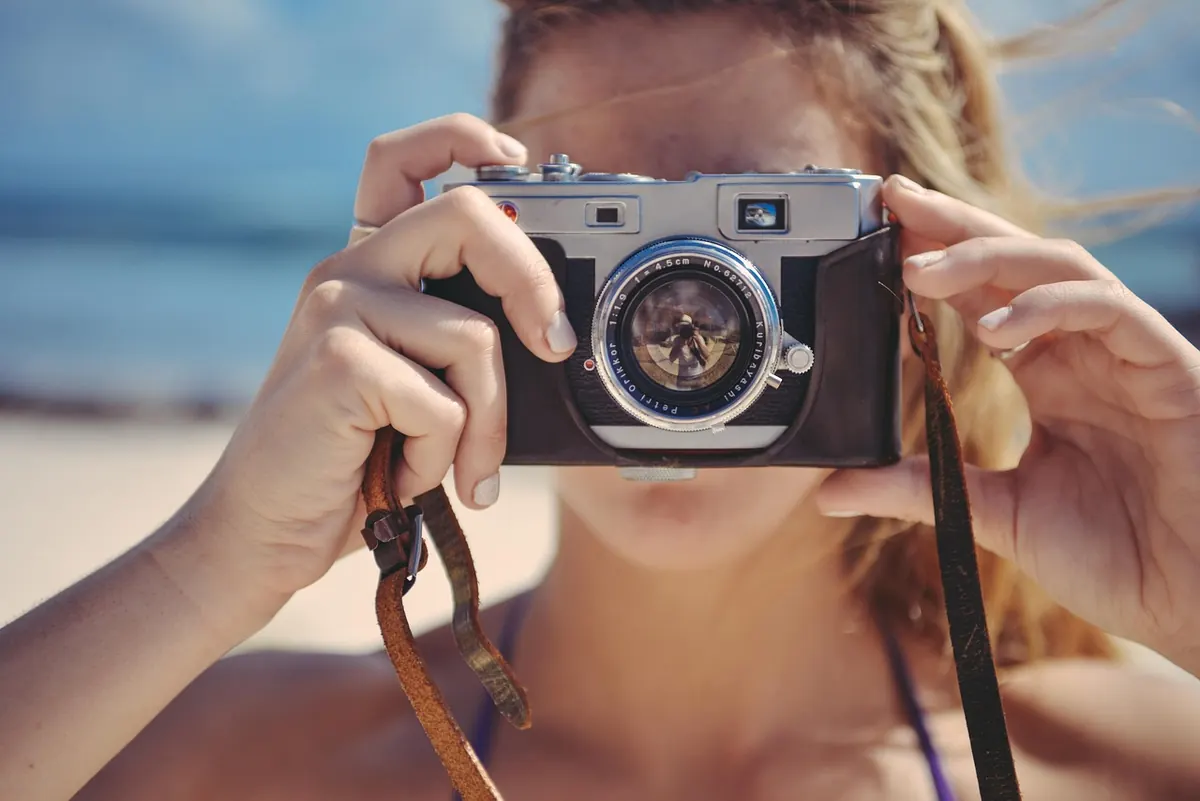
Photo: stokpic / Pixabay