Hostel vs. Guesthouse vs. Apartment Rental: Choosing Where to Sleep
You have found a flight you can live with and a city you are genuinely excited about. Now comes the decision that quietly shapes the whole trip: where you sleep. Three options keep surfacing for roughly the same budget — hostel, guesthouse, apartment rental — and on a booking screen they can look almost interchangeable. They are not.
One hands you a bunk and a kitchen full of strangers. Another gives you a quiet room behind a family's front door. The third gives you a key code, a washing machine and nobody to ask when the boiler misbehaves. The differences concentrate in four places: cost, privacy, cancellation terms and who you end up talking to. Get those right and the rest of the trip tends to look after itself.
Cost: The Nightly Rate Is Only the First Line
A dorm bed is almost always the cheapest way to sleep in a city centre, and it is priced per person, which matters if you are travelling alone. A private room inside a hostel costs noticeably more than a dorm bed but usually less than a hotel, and you keep access to the communal kitchen and lounge. Guesthouses sit in the middle: a private room, often with breakfast, often run by a family who lives on site. Apartment rentals look expensive per night until you divide by four people and subtract the meals you cook instead of eat out.
The headline rate hides the real total. Watch for these:
- City tax. Frequently payable in cash on arrival, at hostels and guesthouses alike, and rarely included in the price you saw.
- Cleaning fees and minimum stays. Common on apartment listings. A three-night minimum can wipe out a short stopover entirely.
- Breakfast. A guesthouse rate that includes it may beat a cheaper room plus a café every morning.
- Lockers and laundry. Hostels often charge for a padlock or a wash; an apartment with a washing machine saves you a laundrette trip.
- Deposits. Apartment rentals sometimes hold a sum on your card for the stay; check how and when it is released.
Compare like with like: same dates, same number of people, total price including everything you will actually pay. That number, not the nightly rate, is the one to judge.
Privacy Has a Shape, Not Just a Price
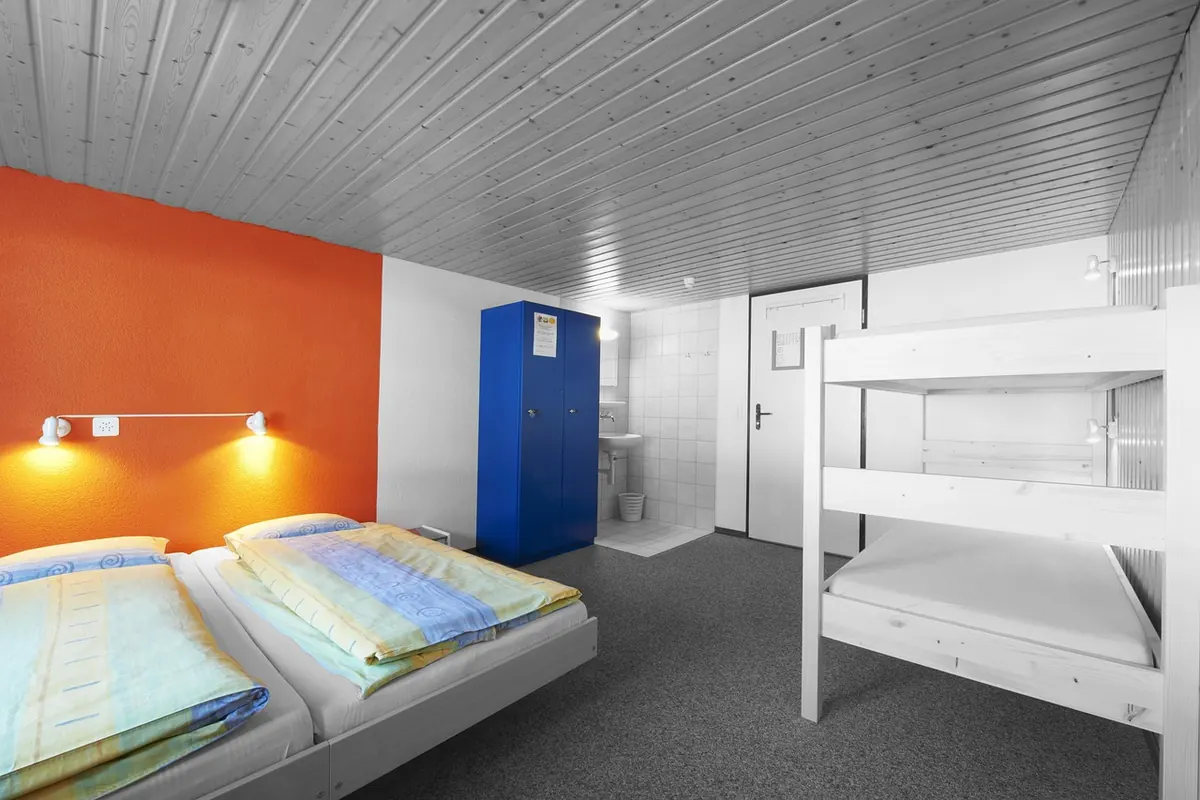
In a dorm you get a bed and a shared bathroom, and your privacy depends on whether the bunk has a curtain, a reading light and a socket. Earplugs and an eye mask are not luxuries; they are the difference between a good night and a bad one. If you like the hostel atmosphere but not the audience, a private room in the same building is the sensible compromise — you get a door, and the common room is still downstairs.
Guesthouses give you a proper room, though not always a private bathroom; read the room description carefully, because "shared bathroom" in a guesthouse means down the corridor. Walls can be thin, and the owner may enforce a house quiet time after ten. That is usually a feature, not a flaw.
An apartment is the most private option, and also the loneliest if you are on your own. Check one thing before booking: whether the listing is for the entire place or a room inside someone's home. The words "entire apartment" and "private room in apartment" describe very different evenings.
Cancellation Terms Decide How Much You Can Improvise
This is where budget travellers lose the most money, and it has nothing to do with the room. A flexible rate with free cancellation until a stated deadline costs a little more, but it lets you move when plans shift. A non-refundable rate saves money and locks you in completely.
Two details catch people out. First, the deadline is almost always in the property's local time, not yours — a "free cancellation until 18:00 on the 12th" means the clock in their lobby, which may be several hours ahead of your kitchen. Second, apartment rentals tend to have stricter terms than hostels or guesthouses: part-payment upfront, partial refunds, or a deposit that is separate from the rental price. Guesthouses occasionally ask for a bank transfer deposit to confirm the booking.
If your itinerary has moving parts — a possible change of city, a friend who may join — pay the small premium for flexibility and put the deadline in your calendar in your own time zone. For anything involving significant money, read the terms on the booking page itself rather than a summary email, and use a payment method with consumer protection where it is available. If a sum is large enough to hurt, it is worth taking proper advice on your card or insurance cover before you pay.
Social Atmosphere: Who You Meet, and When
Hostels
Hostels are built for contact: shared kitchens, walking tours, a bar or a courtyard, and the small daily negotiation over who is going to the market. You do not have to join in, but the opportunity is there every evening. Read reviews for the words guests use — "quiet", "family", "party" — because hostels vary enormously, and the wrong one for your mood is a genuinely unpleasant stay.
Guesthouses
The social life here is the host. You will get the name of the good bakery, the bus that actually goes to the beach, and a warning about the restaurant with the laminated menu. You will not automatically meet other travellers, though breakfast tables sometimes turn into conversations. It is a good choice if you want local information more than company.
Apartment Rentals
There is no built-in social scene at all. That is fine when you are travelling as a couple, a family or a group of friends, because you are each other's company and the kitchen table becomes the common room. For a solo traveller in an apartment, plan your social contact deliberately: a walking tour on day one, a language exchange, a cooking class, a café you return to twice.
Matching the Bed to the Trip
- Solo, first time in a city, two to four nights: a hostel, dorm or private room. The information and company are worth more than the savings elsewhere.
- Couple wanting quiet and a short stay: a guesthouse, ideally with breakfast and a host on site.
- Three or four friends, four nights or more: an apartment. The kitchen and the shared living space pay for themselves.
- Late arrival or very early flight: a guesthouse with a confirmed 24-hour check-in, or an apartment with self check-in and clear instructions.
- Working remotely for a stretch: an apartment or a private guesthouse room, and read the reviews that mention the wifi speed rather than the ones that mention the view.
- One night passing through: whatever is closest to the station, with the simplest cancellation terms.
Booking Tactics Worth Five Minutes
- Read the most recent negative reviews first. They describe the problems that still exist.
- Measure the walk to the centre in minutes, not kilometres, and check the street on a map for a motorway or a nightlife strip.
- Message the property one specific question before booking. The speed and tone of the reply tell you a lot about what happens if something goes wrong at eleven at night.
- Confirm the check-in window, luggage storage, air conditioning or heating, and the exact address — apartment listings sometimes reveal it only after payment.
- For apartments, ask about the lift. A fifth-floor walk-up with a suitcase is a different holiday.
A Last Check Before You Click Book
Ask yourself three questions in this order. How much is this bed per person, all in, for exactly my dates? How much privacy do I need on this particular trip — and will I be arriving tired, late or both? If my plans change next week, what does cancelling actually cost me? Answer those honestly and the choice usually makes itself. The best accommodation is rarely the cheapest one; it is the one whose trade-offs match the trip you are actually taking.
Photo: gery / Pixabay